
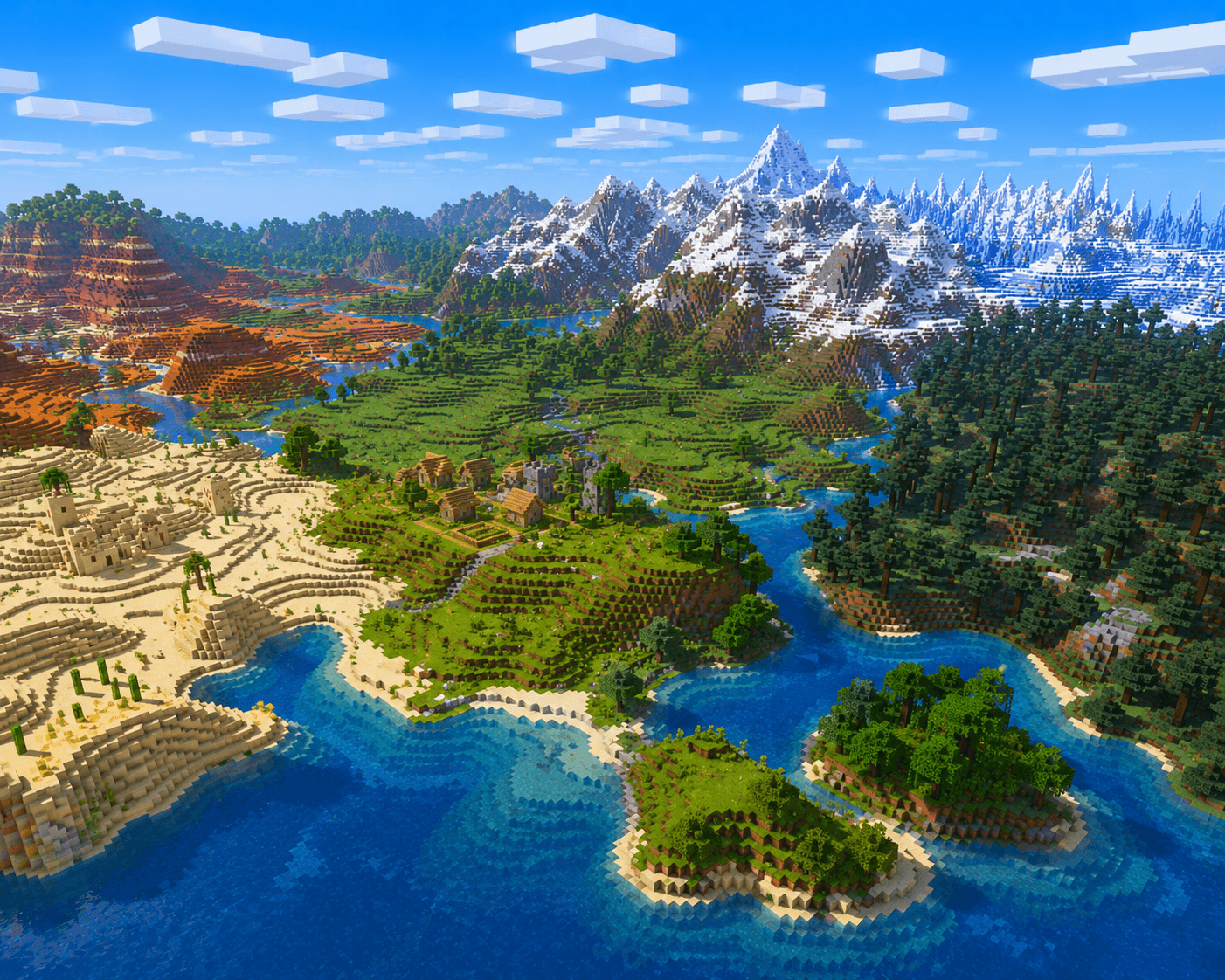

Where you build your base determines your entire Minecraft experience. The right biome gives you easy access to resources, a beautiful environment, and room to expand. The wrong one means constant inconveniences — gravel instead of dirt, lava everywhere, mobs spawning in your walls.
Here are the best biomes for building your base, ranked and explained.
1. Plains — The Best Overall
Why it's great:
- Flat terrain makes building easy — no excavation headaches
- Villages spawn here frequently — easy access to trades, iron golem farms, and beds
- Horses spawn in herds — fast transport from day one
- Good visibility for spotting threats at night
- Grass and flowers everywhere — aesthetic variety
Downsides:
- Not the most visually dramatic setting
- Not much natural shelter (no trees nearby unless you're at a forest border)
Best for: Beginners, large builds, mega bases, farms
Pro tip: Look for a plains biome bordering a forest, river, and village. This combo — flat land, wood source, water, and NPC traders — is the strongest possible starting position in the game.
2. Meadow — Plains' More Scenic Cousin
Why it's great:
- Flowers everywhere — genuinely beautiful backdrop
- Relatively flat with gentle rolling hills
- Donkeys and horses spawn here
- Bees and bee nests occur naturally — free pollination for crops
- Great aesthetics for builds meant to look organic and cozy
Downsides:
- Less common than plains
- Fewer village spawns
Best for: Cozy cottagecore builds, farms with gardens, aesthetic screenshots
Pro tip: Meadows sit in higher-elevation areas, often adjacent to mountains. The combination of a meadow at the base of a mountain biome is one of the most visually stunning starting locations in the game.
3. Taiga — Resource-Rich and Atmospheric
Why it's great:
- Spruce trees everywhere — a beautiful and distinct wood type for building
- Villages (taiga variant) spawn with unique structures and chests
- Ferns add ground-level visual texture
- Wolves spawn naturally — early access to tamed dog companions
- Foxes spawn here — fun passive mob interaction
Downsides:
- Terrain is less flat — you may need to terraform
- Denser forests can make building around trees annoying
Best for: Log cabin builds, wilderness survival bases, players who want a forest aesthetic
Pro tip: Old Growth Taiga (Mega Taiga) has massive 2×2 spruce trees perfect for logging operations, and mossy cobblestone on the ground that looks incredible for rustic builds.
4. Lush Caves (Underground Base)
Why it's great:
- Stunningly beautiful underground environment — azalea trees, glow berries, clay, and moss
- Axolotls spawn here — great for fighting mobs
- Dripleaf plants and spore blossoms create an otherworldly aesthetic
- Building underground makes your base mob-proof naturally
- Clay is abundant — useful for terracotta and bricks
Downsides:
- Dark and caves mean mob spawning risks nearby
- Requires significant excavation to create a liveable space
- Navigating underground is harder for new players
Best for: Players who want a unique base aesthetic, experienced builders, secret bases
Pro tip: Find a lush cave under a meadow or forest (azalea trees on the surface indicate a lush cave directly below). Build a trap door entrance from a tree for a hidden base.
5. Snowy Plains / Snowy Taiga
Why it's great:
- Visually stunning in winter aesthetic builds
- Powder snow in higher elevations for unique gameplay
- Strays (skeleton variant) drop slowness arrows — useful
- Polar bears, rabbits, and foxes add life to the environment
- Villages spawn with unique snowy architecture
Downsides:
- Snow covers your builds constantly — cosmetic issue some players dislike
- Fewer passive mobs (especially animals for food)
- Cold water slows swimming
Best for: Ice castle builds, winter cabin aesthetics, players who love the snow palette
Pro tip: Build near a snowy village and you get pre-built NPC infrastructure immediately. Combine with a snowy plains and nearby frozen river for a stunning visual combination.
6. Savanna — Underrated Gem
Why it's great:
- Flat terrain like plains but with a warm, golden palette
- Acacia wood is unique — orange-tinted, excellent for bright, warm builds
- Villages (savanna variant) with distinctive aesthetics
- Very little rain — no constant sound effects, and lightning is rare (less chance of fire in the area)
- Excellent for mesa-adjacent builds (beautiful red cliffs nearby)
Downsides:
- Acacia trees have a distinctive look that doesn't suit all build styles
- Can feel barren without nearby water
Best for: Desert fortresses, warm-palette builds, savanna villages
Pro tip: Savannas often border Badlands (mesa) biomes. A base at the border gets access to terracotta, red sand, gold ore (terracotta cliffs are full of it), and a striking visual backdrop.
7. Cherry Grove — The New Favorite
Why it's great:
- Introduced in 1.20, Cherry Grove is arguably the most beautiful biome in the game
- Pink cherry blossom trees drop pink petals constantly — magical atmosphere
- Cherry wood is a gorgeous pink-toned wood type unique to this biome
- Pigs and sheep spawn here — good passive mob density
- Perfect for Japanese-inspired or fantasy builds
Downsides:
- Rarer than most biomes — may take time to find
- Terrain is hilly and uneven
- The pink color palette doesn't suit all build styles
Best for: Japanese pagodas, fairy tale cottages, fantasy builds, aesthetic screenshots
Pro tip: Cherry Groves often appear on the sides of mountain peaks. Build on the gentle slope of the grove for a tiered build that shows off both the cherry trees and the architecture.
Biomes to Avoid for Your Main Base
- Swamp — Slimes spawn constantly, murky water, limited building space
- Mushroom Fields — Beautiful but extremely isolated; no mob spawning (which sounds great but means no XP farms)
- Desert — No wood, limited water, sandstorm aesthetic; best for a secondary outpost, not a main base
- Deep Dark — The Warden makes this a death trap for permanent habitation
- Jungle — Dense vegetation, constant ocelot/parrot spawns, hard to clear, easy to get lost
What to Look For Near Any Biome
Regardless of which biome you choose, the ideal base location has these within 500 blocks:
- A village — iron golems, trades, beds, bells
- A river — water source, fish, clay, drowned for tridents
- A forest — sustainable wood supply
- A cave entrance — access to ores without long travel
- Open flat terrain — room for farms and expansion
Use the /locate biome <biome_name> command (Java Edition) to find specific biomes quickly. In Bedrock, the Seed Map website lets you preview your seed's entire biome layout before you even leave spawn.
Final Recommendation
For most players — especially beginners — Plains adjacent to a forest and river is the objectively best starting location. It's not the most dramatic, but it's the most functional. Once you're established, build a secondary base in the biome that excites you most visually.
The best base is the one you actually enjoy spending time in. Pick a biome that matches the game you want to play.